
The regular price is the current manufacturer's recommended price! FREE shipping for orders over EUR 41,67 within CZ+SK
(PPLparcel)
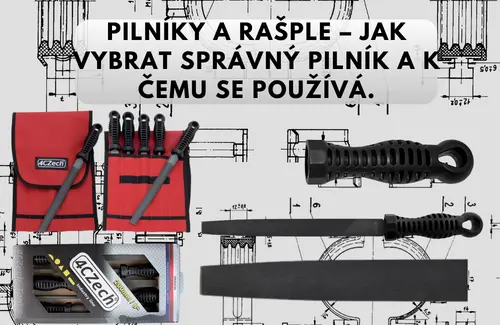
Files: What They Are and How to Use Them 🔧
Files are hand and machine tools designed for precise shaping of metals, wood, and plastics. They are used for removing material, shaping, chamfering edges, and final surface finishing. Choosing the right file affects work precision, removal speed, and the final quality of the finished surface 🛠️
How to Use a File Properly ✋➡️
A file is used with smooth and even strokes. Pressure is applied only during the forward movement, while the backward stroke serves only to return the tool. The workpiece must be firmly clamped 🔩 and the file should be selected according to the material and the required finishing smoothness. Regular cleaning of the file extends its lifespan and maintains consistent performance ✨
How to Quickly Navigate the Range of Files 🧭
Files are divided according to shape, cut (coarseness), length, and intended use. Clear category organization allows you to quickly choose the right tool without unnecessary searching 🔍 Each type of file has a specific purpose—from rough material removal to fine finishing work.
1. Workshop and Universal Files 🏭
Workshop files are essential equipment in every workshop. These include flat, round, half-round, and triangular files. They are suitable for general manual metalworking and, thanks to their versatility, are widely used by professionals, in schools, and in home workshops 🧰
2. Precision, Needle, and Engraving Files 🎯
These files are designed for fine and detailed work. They are used for shaping small parts, in model making, precision mechanics, or when finishing shapes. They allow precise and controlled material removal even in hard-to-reach areas 🔎

3. Specialized Files for Specific Applications ⚙️
Specialized files are designed for narrowly focused tasks such as sharpening saw chains, adjusting keyways, or repairing threads. Thanks to their clearly defined purpose, they speed up work and reduce the risk of damaging the workpiece ⏱️
4. Machine and Rotary Files ⚡
Machine and rotary files are used with electric or pneumatic tools. They allow fast shaping, deburring, and material processing. They are mainly used in professional workshops and industrial environments where performance and efficiency are essential 🏗️
5. File Accessories 🧤
Files also include accessories such as handles, grips, and protective covers. These increase work safety, improve comfort during use, and protect the tool from damage. Properly selected accessories have a direct impact on ergonomics and the lifespan of the file 👍
Conclusion 🧠
Files are indispensable tools for precise manual and machine material processing. Thanks to their clear classification by type and application, it is easy to choose the right tool for a specific task. A quality file, proper technique, and suitable accessories lead to clean results, higher efficiency, and safe work 💪

We have selected more articles for you:

